Switching to Fluorine Free Foam Is a Project, Not a Purchase
Posted by admin | 11 November, 2026
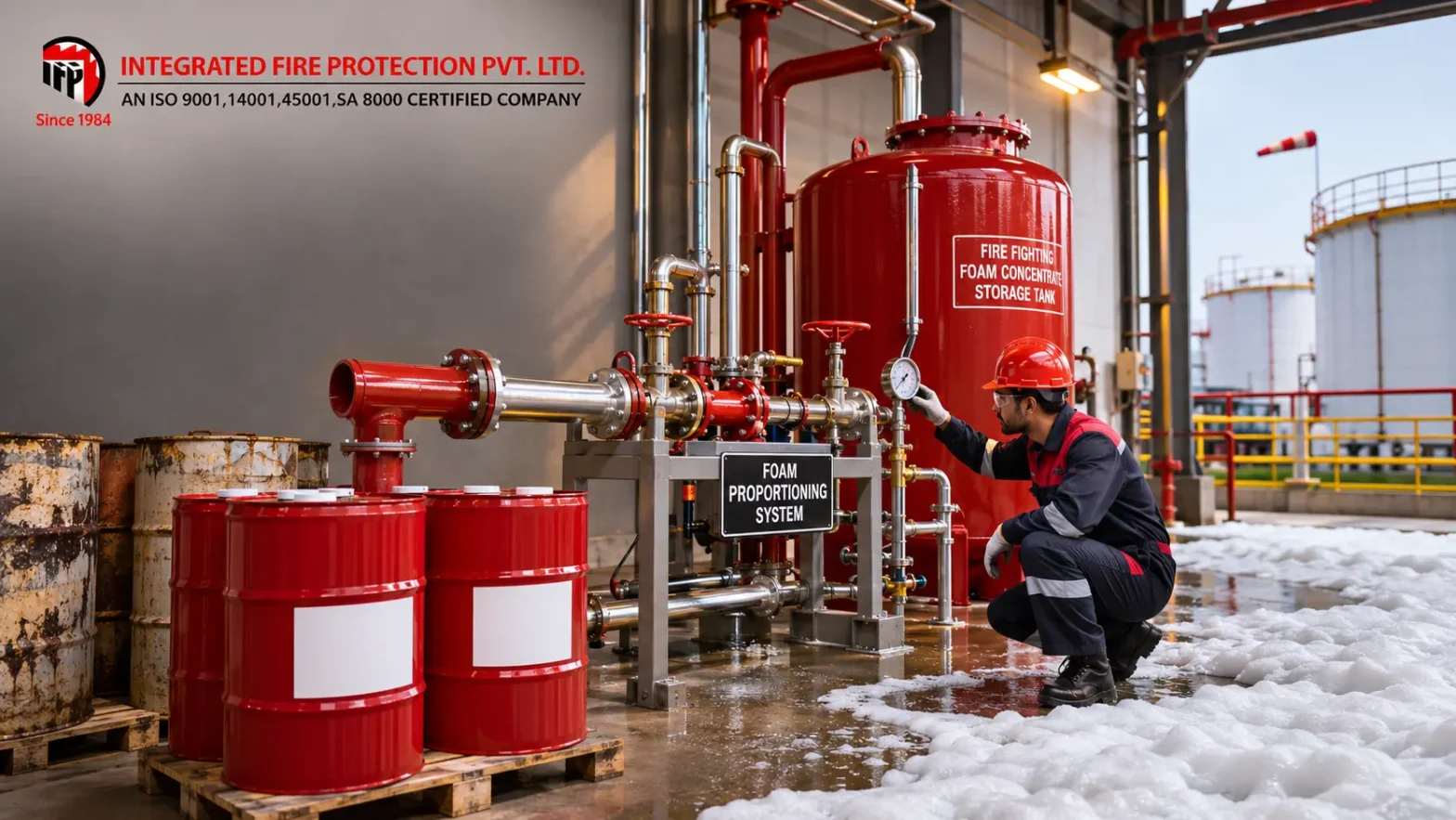
The first deadline has passed. Since 23 October 2026, new portable fire extinguishers containing PFAS-based foam can no longer be placed on the EU market under Commission Regulation (EU) 2025/1988, with alcohol-resistant foams following on 23 April 2027. Regulators elsewhere, including Canada, are moving the same way. So buyers are doing the obvious thing: ordering fluorine free foam and calling the job done.
Here is where the trouble starts.
Years of using AFFF leave PFAS residues behind in tanks, pipework and proportioning units. Pour fresh foam into that system and the residue can contaminate the new concentrate, upset its mixing ratio and produce foam that fails its fire test. The new drums will pass the audit. The system may not pass the fire test.
Switching to fluorine free foam is a technical project, not a simple purchase. Done right, it protects your people, your assets and your compliance record. Done wrong, you pay twice.
Here is what it takes to make a safe transition, in six steps.
What Is Fluorine Free Foam, and Why Is Everyone Switching Now?
Quick answer
Fluorine free foam (F3) is a firefighting foam concentrate made without PFAS, the fluorinated “forever chemicals” used in AFFF. Instead of spreading a film across burning fuel, it smothers the fire under a stable foam blanket. Sites are switching now because regulators are restricting PFAS foams and liability for contamination is rising.
| Factor | AFFF | Fluorine Free Foam (F3) |
|---|---|---|
| How it extinguishes | Aqueous film spreads over the fuel and seals vapours | Foam blanket smothers the fire and blocks vapours |
| Key chemistry | Fluorosurfactants | Hydrocarbon surfactants |
| Environmental persistence | Extremely persistent | Leaves no PFAS behind |
| Regulatory direction | Restricted or being phased out | The replacement path |
| Certification | EN 1568, UL 162 | EN 1568, UL 162 |
| Application sensitivity | Forgiving, as the film covers gaps | Depends on foam quality and application method |
| Existing hardware | Built for it | Proportioners, seals and nozzles may need recalibration |
| Changeover clean-up | Leftover PFAS must be flushed from tanks and pipework | Starts clean only after a proper flush |
| Best fit today | Legacy systems still allowed under transition rules | New installations and planned replacements |
So why does this comparison matter?
The table isn’t about crowning a winner on paper. It shows where the real differences sit, and every row points back to one idea. Start with the mechanism. AFFF leans on a thin aqueous film that races across hydrocarbon fuel. F3 has no film to lean on, so the foam blanket itself has to do the work. That’s why application method and foam quality matter more, and why a drop-in swap is risky.
Persistence explains the regulatory row: PFAS don’t break down, so they build up in soil, water and people. Finally, the hardware row is where budgets go wrong. Proportioners, seals and discharge devices set up for AFFF may need recalibration or replacement, and residual PFAS must be flushed out.
The Real Cost Hides in the Pipes, Not the Drum
Ask most buyers what a fluorine free foam switch costs and they quote the price per drum. That number is the easy part. The expensive part is everything AFFF leaves behind.
Fluorosurfactants coat the inside of storage tanks, pipework and foam monitors. Drain the old concentrate and the residue stays, ready to leach into your new foam. Skip a proper clean, and a PFAS-free product can still test positive for PFAS.
Cleaning is not a quick rinse. Systems often need repeated flushing, and every litre of rinse water becomes contaminated waste. So does the old concentrate. Both usually need specialist handling, typically high-temperature incineration, and approved disposal capacity is limited in many regions.
Can You Pour Fluorine Free Foam into an Existing AFFF System?
Straight answer
Fluorine free foam can go into an AFFF system only after the system has been drained, flushed, checked and retested.
Now the uncomfortable truth: the foam is only one part of a foam system. The proportioner, pipework and nozzles were all matched to AFFF, and changing the concentrate changes the maths.
Start with proportioning. Every system is set to inject a fixed percentage of concentrate into the water stream, usually 1%, 3% or 6%. Many fluorine free foams, especially alcohol-resistant grades, are thicker than AFFF and flow differently through orifices, pumps and in-line inductors. The same applies to bladder tank systems, which is why it pays to understand the difference between bladder tank and balanced pressure proportioning before you switch.
Some manufacturers produce low-viscosity F3 concentrates to make conversion easier. Even so, the general rule stays the same: drain, flush, confirm the proportioning rate, then run discharge tests through your branchpipes and monitors to prove the system still protects. Your foam manufacturer should help you do exactly that.
The 6-Step Fluorine Free Foam Transition Plan
The six steps follow one rule: know before you buy, prove before you switch.
Why does this order work?
The audit comes first because it is easy to underestimate how much foam a site holds: forgotten drums in a store, a mobile trolley at a loading bay, a half-full tank nobody has sampled. Every one of them is a disposal cost and a compliance gap. Mapping hazards before buying stops you choosing the wrong grade, and testing before flushing stops you finding problems after the old foam is gone.
Final Thoughts
Fluorine free foam isn’t the hard part of going PFAS-free. The hard part is everything around it: the residue in your pipes, the proportioners tuned for AFFF, the waste nobody budgeted for and the crews who have never used F3. Treat the switch as a project and those risks become line items you control. Audit, map, certify and commission, in that order, and you will have a system that is compliant on paper and proven in testing.
Planning a Fluorine Free Foam Changeover?
With 40+ years of foam manufacturing, UL Listed products and an NABL-accredited lab, our team can help you audit, test and switch with confidence.