What Design Mistakes Do Firefighting Foam Manufacturers See?
Posted by admin | 24 February, 2026
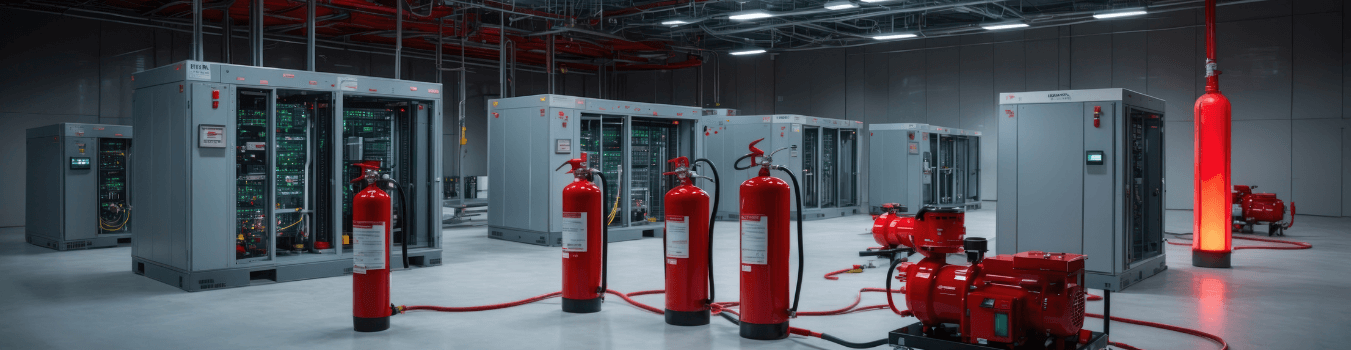
Foam firefighting systems are installed with one clear purpose: to work perfectly when a fire breaks out. Yet in real life, many foam systems fail – not because the equipment is bad, but because the system was designed incorrectly, and this is where reliable firefighting foam manufacturers come into the picture.
In audits, fire incidents, and system upgrades, the same design mistake appears again and again. These mistakes are often invisible until the moment a fire actually occurs, and by the time they are detected, the damage is already done.
In this blog, we will discuss the most common foam design mistakes that can lead to serious firefighting failures. Let’s get started.
Why Foam Firefighting Systems Fail Despite Being Installed Correctly
A common assumption is that, if all the components are plugged in and turned on, the system will work – but that is not always true.
A foam system may look complete, but if the wrong foam was selected, or the system was not sized correctly, or if the components were incompatible or the coverage was miscalculated, then the system is bound to fail under real fire conditions. Also, in most cases, the problem does not come from the equipment or the installation – it starts much earlier, at the design stage itself.
Common Foam System Design Mistakes That Compromise Fire Safety
Choosing the Wrong Foam Concentrate for the Fire Risk
One of the most frequent and dangerous mistakes is selecting foam without properly understanding the fire hazard.
Different fires require different suppression agents:
- Fuel storage fires
- Chemical spills
- Electrical risks
- Commercial kitchen fires
Using a foam that is not suitable for the specific fire class leads to
- Slow fire knockdown
- Poor vapour suppression
- Re-ignition
How Can You Avoid It
Make sure that you always select foam based on:
- Fire class
- Fuel type
- Regulatory requirements
- Environmental restrictions
Foam selection should never be based on only cost or past usage.
Incorrect Foam Application Rate and Expansion Ratio
Foam works only when it is applied in the right quantity and density.
Common design errors include:
- Using low expansion foam where high expansion is needed.
- Underestimating the foam discharge rates
- Ignoring the minimum application standards
The result is incomplete coverage. The fire may appear to be controlled, but that is only for the short term because it can spread again.
How to Avoid It?
Make sure that the design calculations include:
- Correct expansion ratio
- Required discharge density
- Duration of application
Remember that these calculations should be based on actual hazard size and not assumptions.
Foam Tank and Bladder Tank Sizing Errors
Another major reason for system failure is insufficient foam storage.
Designers often:
- Underestimate fire duration
- Size tanks only for minimum standards
- Ignore future expansion or worst-case scenarios
During a real fire, the foam supply may run out before the fire is fully controlled.
How to Avoid It:
Foam tanks and bladder tanks must be sized considering
- Required discharge duration
- Backup safety margin
- Simultaneous discharge zones (if there are any)
A foam that runs out easily is as dangerous as having no system at all.
Foam Concentrate Compatibility Issues
When systems are upgraded or converted, especially during the replacement of older foam types, compatibility issues often arise.
Problems include:
- Chemical reaction with existing piping
- Damage to seals and gaskets
- Corrosion of tank linings
- Foam degradation over time
These issues may not be visible immediately, but may lead to causing long-term system failure.
How Can You Avoid It:
Before introducing any new foam concentrate:
- Conduct compatibility testing
- Inspect tank linings
- Verify material resistance
Never assume that a new foam will work safely in an old system without checks.
Poor Foam Monitor Selection and Placement
Foam monitors are designed to deliver foam accurately to the fire area. However, many systems suffer from:
- Incorrect throw distance
- Blind spots in hazard zones
- Poor elevation or direction
This results in areas that never receive foam during a fire.
How Can You Avoid It:
Foam monitor designs must consider:
- Actual fire spread pattern
- Obstructions
- Wind influence (for outdoor hazards)
- Required coverage overlap
The placement should be based on engineering analysis and not on convenience.
Incorrect High Expansion Generator Design
High expansion foam systems are effective only when the generator capacity matches the protected volume.
The common mistakes generally include:
- Undersized generators
- Incorrect air-to-foam ratio
- Ignoring enclosure leakage
This causes delayed foam buildup and allows fire growth before suppression.
How to Avoid It?
Generator sizing must be based on:
- Volume of the protected area
- Required fill time
- Air movement and ventilation.
Make sure that the design is realistic and not theoretical.
Inadequate Foam Proportioning and Mixing
A foam system is only as strong as its mixing accuracy.
Design issues generally include:
- Incorrect proportioner type
- Pressure mismatch
- Poor calibration
- Unstable foam solution
This leads to creating a weak foam that breaks down quickly.
How to Avoid It:
Select proportioners that are based on:
- System pressure
- Flow range
- Foam type
Regular testing and calibration must be a part of the design plan.
How to Avoid Foam System Design Failures
A reliable foam system starts with good planning.
Best practices include:
- Detailed fire risk assessment
- Corrector foam selection
- Accurate hydraulic calculations
- Compatibility verification
- Realistic system testing
- Presence of experienced fire protection professionals.
Final Thoughts: Choose the Best Firefighting Foam Manufacturers Today!
Foam fire protection equipment is more than equipment—it is a life safety system.
The best foam, tanks, and monitors can still fail if the system design is not done well. Most often, failures in firefighting can be avoided if the system design is treated with care and proper technical knowledge. This is why experienced firefighting foam manufacturers, like Integrated Fire, lay stress on correct system design rather than relying only on hardware.
Linkedin Profile: https://www.linkedin.com/company/integrated-fire-protection-pvt-ltd/
Wet chemical page: https://integratedfire.net/products/wet-chemical/