Why Canada’s New Hangars Need the Right Fire Protection Equipment Supplier
Posted by admin | 21 October, 2026

Aircraft Hangar Fire Protection · Canada
One Fuel spill.
One spark.
Million of dollars in aircraft gone in minutes
Table of Contents
Canada’s airports are building hangars at a rapid pace. In 2026, Bombardier proposed an 11,705 m² hangar with six aircraft positions at Montreal-Trudeau. The calgary airport authority approved a new wide body maintenance for bigger hangers. But a bigger hangar means bigger risk. Jet fuel, wide-open floors, high ceilings, and aircraft worth tens of millions of dollars all sit under one roof. A fuel spill fire can spread across the floor in seconds, often faster than any crew can respond. The best solution is a fire protection equipment supplier. A fuel spill fire can spread across the floor in seconds, often faster than any crew can respond.
In this blog, let us explore why hangars are so vulnerable, how high-expansion foam protects them and what to look for when choosing the right partner.
Key Takeaways
What makes hangars particularly susceptible to fire hazards?
Quick answer
Hangar fires pose their own set of challenges because of the presence of substantial quantities of jet fuel, large empty spaces, and highly valued aircraft all in one place.
This is different from other places like warehouses and factories because it is a place where aircraft are fueled, defueled, repaired, and stored. Small leakages of fuel may occur during maintenance, leading to pools of highly flammable liquid forming on the ground. In case there is a fire, this would spread under and around the aircraft, an area that the sprinklers above will not be able to reach easily. The high ceiling height also means that heat and smoke will not be detected easily.
| Fire risk | Why it matters | Impact if unprotected |
|---|---|---|
| Jet fuel leaks and spills | Creates a flammable pool on the hangar floor | Fast spreading pool fire |
| Large open volume | High ceilings delay detection and response | Fire grows before system activates |
| Wing and fuselage shielding | Aircraft block overhead sprinkler water | Fire burn unchecked beneath the aircraft |
| Maintenance work | Welding, electrical repairs and solvents creates ignition sources | Sudden ignition during routine work |
| High value assets | Several aircrafts worth millions | Heavy financial loss and long downtime |
Due to this reason, hangars should have an automatic protective system which covers all the floors, including the area under the aircraft.
How does high-expansion foam help in protecting aircraft hangers?
Quick answer
High-expansion firefighting foam protects aircraft hangars by quickly filling the floor area and the space around the aircraft with a thick blanket of foam that smothers the fire, cuts off oxygen and cools the area, including the wings.
High expansion foam is made by mixing a small amount of foam concentrate with water and a large volume of air. Generators mounted high on the hangar walls or roof produce this foam within seconds of a fire being detected. It flows across the floor, rises around the aircraft and buries the fire. Below is the model for you to understand:
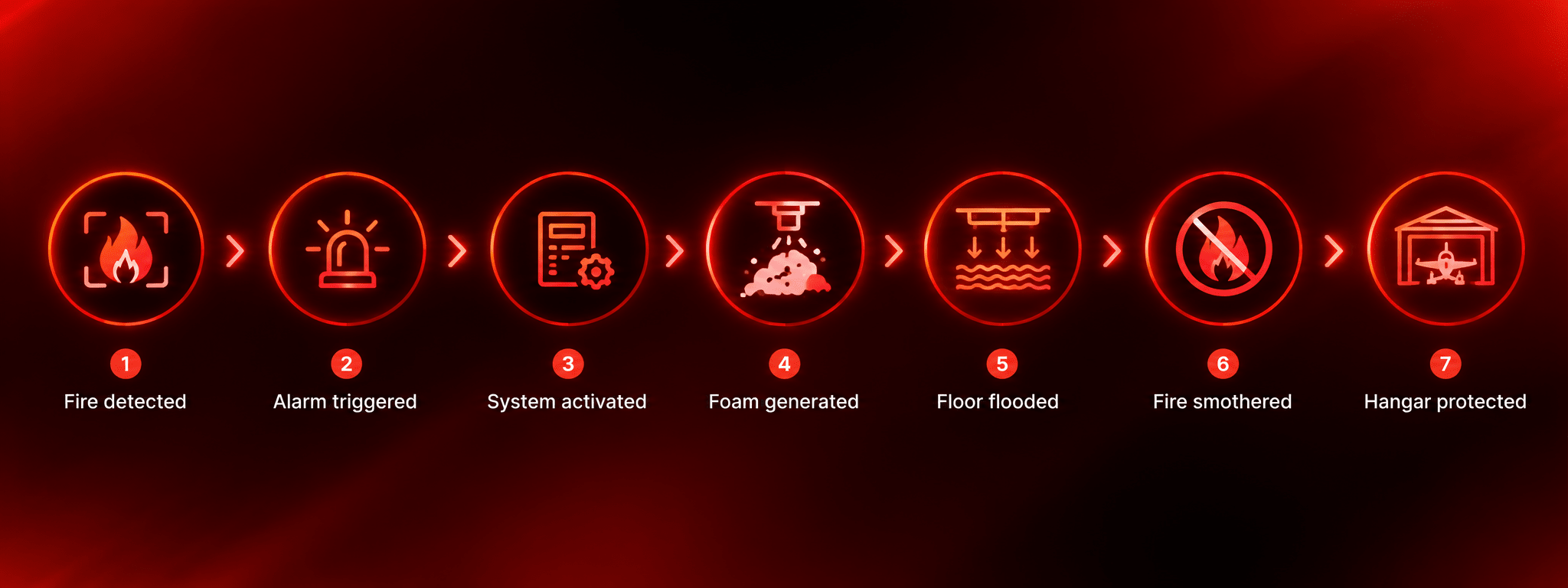
Now why these work so well in hangars:
To get these results, the system has to be more reliable, certified equipment such as UL-listed high-expansion foam generators matched with the right foam concentrate.
Choosing the Right Fire Protection Equipment Supplier for Your Hangar
The right supplier doesn’t just sell your equipment. It helps you stay protected and compliant for years to come.
In Canada, compliance is about to get stricter. Environment and Climate Change Canada is proposing to prohibit the manufacture, use and import of remaining unregulated PFAS. According to the United States federal government, PFAS foams are commonly used in aviation crash trucks and for fire suppression systems within aircraft hangars.
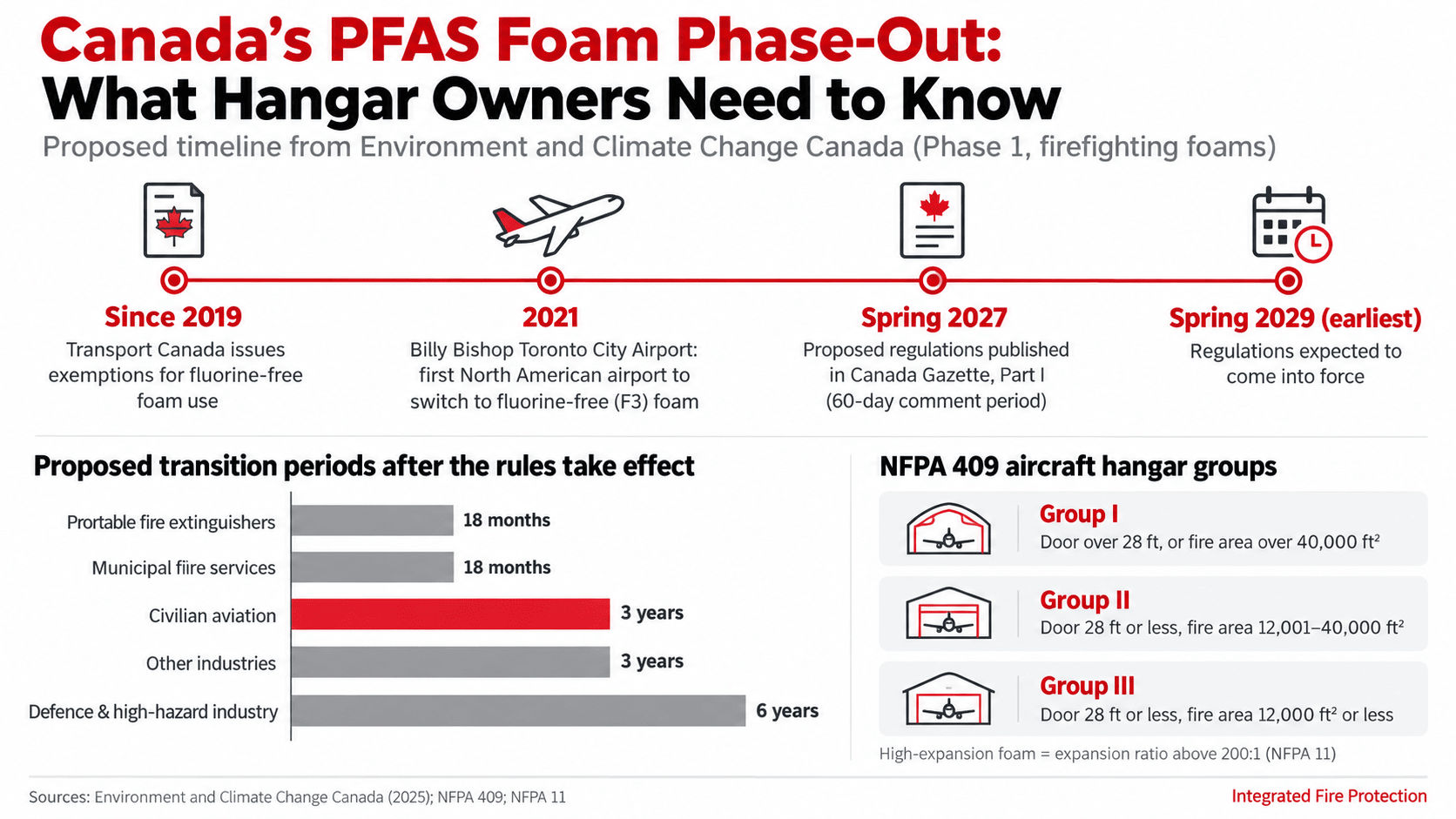
So the real question isn’t just “does this foam work today?” It’s “will this system still be legal and effective five years from now?”
That’s why your choice of fire protection equipment supplier matters. Look for a partner that offers UL-listed high-expansion foam generators alongside fluorine-free high-expansion firefighting foam, so your system is ready for the PFAs phase-out.
Final takeaways
Canada’s airports are growing fast, and every new hangar brings aircraft worth millions under one roof. A single fuel spill can turn into a fast-spreading fire beneath the wings where ordinary sprinklers can’t reach. That’s why a fire suppression system built around high-expansion firefighting foam has become the standard for modern hangars. With Canada’s PFA rules tightening, the system you choose today also needs to stay compliant tomorrow. Working with an experienced fire protection equipment supplier can make that path simpler, and a short conversation with the right team could be the first step toward it.
Need deeper advice ?
Talk to our team about high-expansion foam protection for your hangar.
info@integratedfire.net · export@integratedfire.net
Frequently asked questions
What makes aircraft hangars susceptible to fire hazards?
Hangar fires pose their own set of challenges because of the presence of substantial quantities of jet fuel, large empty spaces, and highly valued aircraft all in one place.
How does high-expansion foam protect aircraft hangars?
High-expansion firefighting foam protects aircraft hangars by quickly filling the floor area and the space around the aircraft with a thick blanket of foam that smothers the fire, cuts off oxygen and cools the area, including the wings.
How is high-expansion foam made?
High expansion foam is made by mixing a small amount of foam concentrate with water and a large volume of air. Generators mounted high on the hangar walls or roof produce this foam within seconds of a fire being detected.
What should I look for in a fire protection equipment supplier for a hangar?
Look for a partner that offers UL-listed high-expansion foam generators alongside fluorine-free high-expansion firefighting foam, so your system is ready for the PFAS phase-out.