Bladder Tank vs Balanced Pressure: Which is Better?
Posted by admin | 01 June, 2026
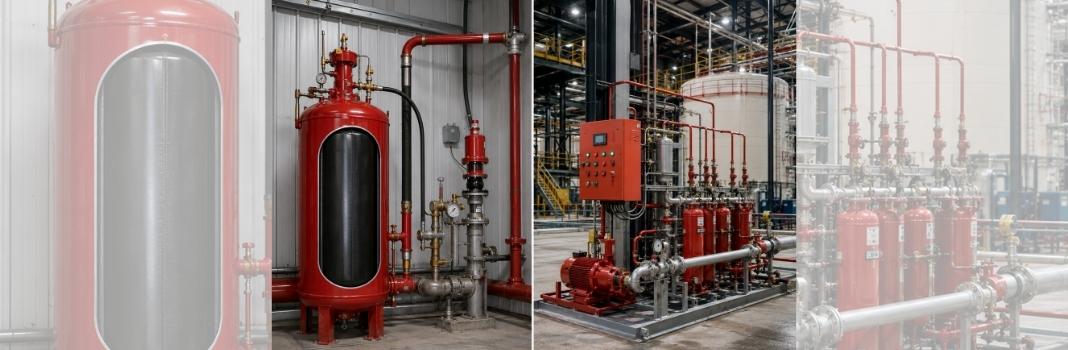
Bladder Tank vs Balanced Pressure: Which is Better?
Which foam system is really right for your facility – and are you sure you’re not about to spend more than you need to? If you’ve been going back and forth between a bladder tank system and a balanced pressure foam system, you’re not alone. These two are the most widely compared options in fire protection engineering – and the confusion is completely understandable. They both deliver foam concentrate to a fire suppression system, but the way they do it, the cost involved, and the situations they are best suited for are quite different.
A system that’s oversized for your facility wastes budget. One that’s underpowered for the job puts lives and assets at risk. This guide breaks down both systems side by side, covers real-world use cases, and focuses on considerations and common problems, so you can walk away with a clear and confident decision.
Choosing the right foam system can impact both safety and cost. Read on to find the right fit – or speak to a specialist today.
Bladder Tank System for Fire Suppression
One of the simplest and most reliable systems for foam proportioning is the bladder tank system, which has proven its efficiency over decades. This system operates without external power and requires minimal maintenance.
How Does the Bladder Tank System Work?
The concept is straightforward. A bladder tank foam system includes a pressure vessel (tank) with a flexible bladder inside. Foam concentrate is injected into the bladder; therefore, when the bladder tank foam system is activated, pressurised water is introduced into the bladder via an inlet pipe, thus squeezing the bladder and pushing foam concentrate through a proportioner into the water flow.
Components of a Bladder Tank System
- Tank – serves as the pressure container in which all the equipment is placed
- Bladder – a flexible interior bag that contains the foam concentrate
- Proportioner – maintains the proper proportion between foam and water in the solution
- Foam concentrate – contained within the bladder for immediate use upon activation
Benefits of a Bladder Tank System
- Effective – immediate response, as there is no requirement for a power source
- Less maintenance – a smaller number of components reduces maintenance
- Compact – does not require external pumps or complicated pipelines
- Affordable – less initial and operational cost than the pump systems
- Field tested – has been successfully installed in many warehouses and industries
Disadvantages of a Bladder Tank System
- Unadjustable – foam-to-water ratio cannot be altered once set
- Rigid design – not suitable where multiple hazards exist or there is variation in foam requirement
- Replacement – the tank needs replacement after the foam is used up completely
- Space limitations – larger operations would require more than one tank
What Is a Balanced Pressure Foam System?
The balanced pressure foam system is a more advanced system compared to traditional foam proportioning methods. Rather than relying only on water pressure, this system utilises a special foam injection pump to inject foam concentrate into the water flow under specific pressure.
How a Balanced Pressure Foam System Operates?
The foam concentrate is contained in a special tank. However, there is no bladder in the tank as in the bladder system. In the balanced pressure system, a foam pump draws foam concentrate from the storage tank and delivers it to the water supply line at the necessary pressure. There is also a special balancing valve in the system that ensures the pressure of the foam concentrate equals that of the water pressure. The system gets its name from this balancing mechanism.
Benefits of a Balanced Pressure Foaming System
a. Very High Flexibility
The rate of concentration may be varied for various kinds of foams and dangers
b. Continuous Process
Primarily suited for operations that involve huge discharges
c. Multi-Zones
Can cater to multiple risk zones using a single installation
d. Proportioning Accuracy
Possesses greater accuracy in relation to the foam-to-water ratio
e. Scalability
Easily scalable according to need
Limitations when compared to bladder tank systems
In comparison to a bladder tank system, there are a number of limitations as far as the balanced pressure system is concerned. However, there are some key limitations to consider:
a. Dependent on Power
Foam pumps need an electrical/diesel energy source; in case of no power supply, the whole system will fail.
b. More complex
Higher system complexity leads to increased points of failure over time.
c. More expensive installation
Installation costs include the foam pump and its control mechanism
d. More Maintenance Needed
Foam pump and control mechanisms need periodic maintenance
Bladder Tank vs Balanced Pressure: Key Differences
| Feature | Bladder Tank System | Balanced Pressure System |
| Power Requirement | Not required | Required (pump-driven) |
| Maintenance Level | Low | Moderate to High |
| Flexibility | Limited (fixed rate) | High (adjustable) |
| Installation Cost | Lower | Higher |
| Operational Cost | Lower | Moderate |
| Best Application | Smaller to mid-scale facilities | Large industrial / airports / oil & gas |
| Foam Concentration Control | Fixed Proportioning | Precise variable control |
| System Complexity | Simple | Complex |
| Reliability during Power Failure | High (no power needed) | Lower (depends on your power) |
In respect to efficiency, both systems have the ability to effectively suppress foam. The distinction between the two systems is in their flexibility. Bladder tank systems will operate the same way every time – and this is precisely what is needed when dealing with static and clearly defined hazard areas. In contrast, balanced pressure systems have an advantage in situations where there is variation in foam demand, or where several hazard zones need protection.
When looking at facilities that face only one risk scenario, with a fixed foam demand, then a bladder tank system will perform better than a balanced pressure system.
Bladder Tank vs Balanced Pressure System Cost Comparison
a. Installation Cost
The installation of bladder tanks is relatively cheaper. There is no need for a foam pump, control system, or much piping. Balanced pressure systems have more parts and require a professional to install.
b. Operational Cost
The cost of operating a bladder tank is negligible as no pumping mechanism is required along with very few services. The balanced pressure system incurs recurring costs of pump servicing, electricity charges, and control equipment examination.
c. Lifecycle cost
In general, the use of bladder tank systems would be more economical in terms of cost savings during their estimated lifespan of 10 to 15 years. However, in larger buildings that can utilize the balanced pressure system, their benefits outweigh the additional costs incurred by the system.
When to Choose a Bladder Tank System
Best Use Cases of a Bladder Tank System
- The bladder tank system is the preferred option in numerous typical fire safety applications in industry and commerce:
- Warehouses – guaranteed performance without sophisticated systems
- Small to medium-sized industrial plants – easy to install and economical to operate
- Flammable liquid tanks – steady flow of foam
- Loading docks and pump stations – independent and dependable
- Remote sites – does not require electrical power to activate
Why a Bladder Tank System is Ideal for Low Maintenance Needs
- Another compelling reason to use a bladder tank fire suppression system is its simplicity. It doesn’t require any pumping equipment to be maintained, no electrical controls to be configured, nor any mechanical components that might wear out after prolonged periods of use.
- For those looking to have an effective fire suppression system that operates efficiently without supervision, this can be a very appealing choice.
- Inspections on an annual basis and occasional recharges of the foam concentrate should be enough to maintain a bladder tank fire suppression system in optimal condition.
Looking for a reliable bladder tank solution for your facility? Talk to our team and get the right specification from day one.
When to Choose a Balanced Pressure Foam System
Best Use Cases of Balanced Pressure Systems
The balanced pressure type is ideal for applications where the size, complexity, or type of fire hazard cannot be handled by a fixed volume system:
- Airports – Large facilities, multiple risk areas, constant demand
- Oil & Gas – Hazardous environments, changing foam needs
- Petrochemical plants – Ability to operate multiple zones at once
- Maritime/Offshore – Longer discharge times required
- Multiple foam systems – Flexibility in rate of concentration is crucial
When a Bladder Tank System May not Be Enough
Sometimes, there will be instances wherein the bladder tank system, although dependable, will not be able to answer the need for the fire protection system. For instance, when you have two or more critical areas with multiple fire hazards where simultaneous application of foam is necessary, it might be possible that the bladder tank will eventually exhaust its contents before the fire is extinguished.
Likewise, when you have areas that make use of various foam concentrates such as AFFF, AR-AFFF, and protein foam, the fixed ratio system of the bladder tank system becomes a major restriction.
Bladder Tank System Design and Sizing Considerations
How to Select the Right Bladder Tank Capacity
Selecting the correct size for a bladder tank depends on how much foam you are going to consume and also making sure that it contains sufficient concentrate at the time of discharge, which can range between 10 and 65 minutes based on hazard rating and relevant standard (EN 13565/NFPA 11).
Your fire protection engineer calculates the application rate (litres per minute per square meter), the coverage area, and the ratio of foam to water to find out how much concentration is necessary. When designing the bladder tank, you should always allow some extra capacity, as under-sizing is one of the most frequent errors made in the design of foam systems.
Factors affecting the Bladder Tank System Performance
- Flow rate – flow rate of water entering the system has a direct impact on bladder squeeze rate and discharge rate of foam
- Type of foam – various concentrations of foam solutions (1%, 3%, 6%) will require different amounts of water and determine tank size
- Delivery method – sprinklers, monitors, and fixed nozzles each use a different amount of foam solution
- Temperature – extremely low temperatures may influence the elasticity of bladders and viscosity of foam solution, so verify always the operating temperature range
- Water pressure – water pressure must be high enough to properly activate the proportioner
Common Issues With a Bladder Tank Fire Suppression System (And Solutions)
a. Bladder Tank Failure Problems
The biggest issue related to bladder tanks is deterioration of the bladder due to time. The inside lining may become weak, tear internally, or simply become too rigid due to extended periods when the system was idle or due to exposure to inappropriate foam concentrate. A sign of bladder failure would be foam concentrate entering the water line or reduced system pressure during testing.
Solution: Conduct periodic system tests where you will inspect the tank internally and test the bladder itself. Change the bladder at intervals recommended by the manufacturer, usually in every 10-12 years.
b. Problems with Foam to Water Ratio
One problem with foam is that there may be an imbalance in the foam to water ratio. This might arise from the aging of the proportioning system, the wrong amount of foam being added to the bladder tank, or operating pressures being too high or too low.
How to solve it:
Do annual tests on the performance of your proportioning system. Ensure that the right type of foam concentrate and its concentration are used in each application. Watch the water pressure and make sure that it remains constant.
Bladder Tank System Maintenance Tips
- A complete system test should be done each year according to the relevant guidelines
- Examine the exterior surface of the tank for signs of corrosion, particularly near joints and welds
- Have the foam concentrate tested for its quality in case the system is older than five years
- Verify that all the isolating valves function correctly and are properly marked
- Maintain inspection and refill logs of the foam concentrate
- Do not use multiple brands of foam concentrate in one bladder tank
Bladder Tank vs Balanced Pressure: Which is Better for your Facility?
Decision Checklist for Choosing Between Systems
- Budget: In case of maintaining low budget and low lifecycle costs bladder tank systems come out better in both aspects for smaller to mid-sized operations.
- Capacity needs: In larger facilities with different areas exposed to risks, or with continuous flow requirements, balanced pressure systems allow you to do what a bladder tank system can’t do.
- Availability of power supply: In cases where electricity is not always available, a bladder tank system has a big advantage, as it starts automatically using water pressure only.
- Maintenance expertise: In case the professionals lack technical knowledge needed for proper maintenance of a fire suppression system, it would make sense to go for bladder tanks.
- Types of foam required: If your operation requires various concentrations or types of foam, a balanced pressure system is the right fit.
Frequently Asked Questions
a. How Long Does a Bladder Tank Last?
The average lifespan of a bladder tank fire suppression system is between 20 to 25 years, though this could be exceeded. The bladder itself will need replacing after about 10 to 12 years, depending on the type of foam concentrate used and the number of times the bladder tank has been used.
b. Is the bladder tank system better than a balanced pressure system?
If your facility requires a fire protection solution that is easy to maintain, small in size, and relatively inexpensive, then yes, a bladder tank system may be a better choice for you. However, if your facility has multiple hazard areas, then a balanced pressure system would probably work better for you.
c. What does it cost to install a bladder tank system?
Installation costs depend on the volume of the bladder tank system and the type of foam concentrate required. Generally speaking, it is much cheaper to install a bladder tank system when compared to its balanced pressure counterpart.
d. Could a bladder tank be faulty?
Certainly – since a bladder tank is part of a mechanical system, it could be faulty if it is not taken care of. The most frequent causes of bladder failure are bladder deterioration, wrong concentrate use, and wear and tear of the proportioner. The positive thing here is that these are all preventable with the right inspection and maintenance.
Choose the right Bladder Tank for your System: Contact the Experts
While both the bladder tank system and the balanced pressure foam system are reliable and effective means of fire fighting, there are clear situations where one is clearly better suited than the other. The bladder tank system is the way to go for organizations seeking efficiency, affordability, and operation without the need for power. On the other hand, the balanced pressure system is ideal for those seeking flexibility, versatility, and uninterrupted discharge.
Before reaching a conclusion, however, it is crucial to consider the risk factor, the quantity of foam needed, and available power sources.
Still unsure which system fits your requirements?
Get expert guidance from a fire protection specialist who understands your industry. We’ll help you specify the right foam system – whether that’s a bladder tank, a balanced pressure system, or something in between.
Get a Custom Foam System Recommendation Tailored to Your Facility