What Is Wet Chemical Fire Suppression? Complete Guide
Posted by admin | 04 June, 2026
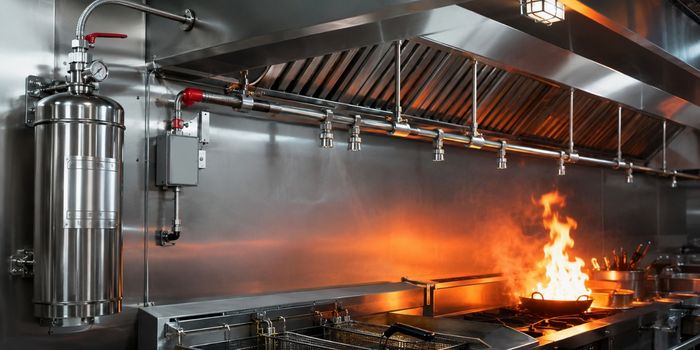
What Is Wet Chemical Fire Suppression? A Complete Technical Guide
Commercial kitchens, industrial cooking facilities, and food processing plants share one common and serious fire risk — cooking oil fires. These fires burn at extreme temperatures and cannot be controlled by standard extinguishing methods. Wet chemical fire suppression is the globally recognized solution engineered specifically for this hazard.
This guide covers everything you need to know: how wet chemical systems work, where they are required, key components, compliance standards, and how to choose the right system for your facility.
What Is Wet Chemical?
A agent is a specially formulated potassium-based liquid used to suppress fires involving cooking oils and fats. When discharged onto a burning surface, it reacts chemically with the hot oil through a process called saponification — converting the burning oil into a thick, soapy foam layer that cools the surface and prevents re-ignition.
This two-stage reaction is what makes wet chemical uniquely effective:
- Cooling — The liquid rapidly reduces the oil temperature below its ignition point.
- Smothering — The foam layer cuts off oxygen supply, stopping the fire from reigniting.
No other extinguishing agent achieves both effects simultaneously on high-temperature oil fires, which is why it is classified under Class K (North America) and Class F (Europe/Asia) fire categories.
Where Is a Wet Chemical System Required?
Wet chemical systems are mandatory in any environment where cooking oils or fats are used at high temperatures. Common applications include:
- Commercial restaurant kitchens — Hotels, standalone restaurants, fast food chains
- Cloud kitchens and catering facilities — High-volume, enclosed cooking environments
- Hospital and institutional canteens — Where continuous cooking operations take place
- Industrial food processing plants — Large-scale frying and cooking lines
- Offshore platform galleys — Marine and oil rig cooking facilities
- Airport and stadium food courts — High-footfall commercial cooking operations
If a facility operates deep fryers, commercial ranges, griddles, woks, or broilers — a wet chemical suppression system is not optional. It is a legal and safety requirement under international fire codes.
Key Components of a Wet Chemical Fire Suppression System
A complete, certified wet chemical system is made up of several interconnected components, each performing a critical role:
1. Wet Chemical Agent Cylinder
The agent is stored in a pressurized stainless steel cylinder. The cylinder size is determined by the number and type of cooking appliances being protected. It must be certified to international standards and regularly recharged after activation.
2. Detection Network
Fusible links or heat detectors are installed inside the kitchen hood, above cooking appliances, and inside the duct. When temperatures exceed a set threshold, the detection link melts or triggers, automatically activating the suppression system.
3. Discharge Nozzles
Specialized nozzles are positioned over each appliance — fryers, griddles, ranges, and plenums. Nozzle placement follows precise engineering calculations to ensure full coverage without blind spots. The type of nozzle used depends on the appliance it protects.
4. Piping Network
A dedicated stainless piping network connects the cylinder to each discharge nozzle. The pipe sizing, routing, and pressure calculations are engineered to ensure consistent agent delivery across all nozzles simultaneously.
5. Manual Pull Station
A manual pull station is installed at the kitchen exit point, allowing any person to trigger the system immediately if they detect a fire before the automatic detection activates. This provides a critical redundancy layer.
6. Fuel Shutdown Interlock
Certified wet chemical systems include automatic shutdown of gas, electricity, or fuel supply to cooking appliances upon activation. This prevents re-ignition from a hot burner or electrical spark after suppression.
7. Alarm Interface
Systems are connected to the building’s fire alarm panel, triggering audible and visual alerts throughout the facility. This ensures kitchen staff and building occupants are notified immediately.
Wet Chemical vs. Other Fire Suppression Agents
Understanding why wet chemical outperforms other agents for cooking fires clarifies the need for a dedicated system:
| Agent | Effective on Oil Fires? | Prevents Re-Ignition? | Approved for Class K/F? |
|---|---|---|---|
| Wet Chemical | ✅ Yes | ✅ Yes | ✅ Yes |
| Dry Chemical Powder | ⚠️ Partial | ❌ No | ❌ No |
| CO₂ | ⚠️ Partial | ❌ No | ❌ No |
| Water Mist | ⚠️ Limited | ⚠️ Limited | ⚠️ Conditional |
| AFFF Foam | ❌ Not designed for this | ❌ No | ❌ No |
Dry chemical powder, while effective for Class B fires, leaves a corrosive residue on kitchen equipment and does not cool the oil surface — making re-ignition highly likely. CO₂ displaces oxygen but provides no cooling. Only a properly designed wet chemical system addresses both the cooling and smothering requirements of Class K/F fire hazards.
Compliance Standards for Wet Chemical Systems
Any wet chemical system must meet recognized international fire safety standards. The key standards are:
- UL 300 (Underwriters Laboratories, USA) — The most widely referenced standard for commercial cooking fire suppression. Tests systems against modern high-efficiency fryers and cooking equipment.
- NFPA 17A — Standard for Wet Chemical Extinguishing Systems published by the National Fire Protection Association, covering design, installation, inspection, and maintenance.
- EN 3-7 — European standard for portable fire extinguishers including Class F wet chemical units.
- BS EN 15182 — Standard for non-portable fire-fighting equipment related to wet chemical application.
In addition to product standards, installation must comply with the applicable local civil defence or fire authority requirements, which in most Middle East, South Asian, and Southeast Asian markets align closely with NFPA and UL guidelines.
IFP manufactures and supplies wet chemical systems that are UL Listed and NFPA 17A compliant, ensuring acceptance by fire authorities across global markets. [INTERNAL LINK → Product: CAFS & Fire Extinguisher / Fire Suppression System]
Wet Chemical System Design: Key Considerations
Designing a system is an engineering process — not a product selection. Each installation must account for:
Appliance Type and BTU Output Deep fryers with larger oil volumes require greater agent quantities and different nozzle configurations than griddles or ranges. The system design must reflect actual appliance specifications.
Hood and Duct Dimensions The suppression system must cover the entire hood interior, the duct entry plenum, and each protected appliance. Gaps in coverage — even small ones — create fire risks.
Airflow and Ventilation Rate High airflow through commercial hoods can interfere with agent distribution. System design must account for makeup air volumes and exhaust rates to ensure correct agent delivery.
Number and Arrangement of Appliances Systems protecting multiple appliances in a cooking line must ensure simultaneous discharge across all nozzle points.
Manual and Automatic Activation Paths Both automatic detection-triggered activation and manual pull station activation must function independently to ensure reliability.
A certified system designer performs hydraulic calculations, appliance surveys, and a complete hazard analysis before finalizing any wet chemical system design.
Inspection and Maintenance Schedule
Wet chemical systems require regular, scheduled maintenance to remain functional and compliant:
- Every 6 months — Full system inspection: nozzle alignment, fusible link condition, cylinder pressure check, manual pull station test, piping integrity check
- After every activation — Complete system recharge and inspection before returning to service
- Annually — Internal inspection of cylinders where required by the applicable standard
- After any kitchen modification — Appliance changes, hood alterations, or kitchen layout changes require a system re-evaluation
Neglecting maintenance is the leading cause of wet chemical system failure during actual fire events. A system that is not serviced on schedule may discharge inadequately, fail to detect, or fail to shut down fuel supplies.
Why Choose IFP for Wet Chemical Fire Suppression
Integrated Fire Protection (IFP) has supplied certified fire suppression products globally since 1984. With a DSIR-recognized R&D facility and products tested to UL, EN, LR, and MED standards, IFP delivers wet chemical systems that meet the exacting requirements of commercial and industrial facilities across the Middle East, Africa, and Southeast Asia.
IFP’s engineering team provides full project support — from hazard analysis and system design through supply, installation support, and ongoing maintenance — making IFP a single trusted source for complete wet chemical fire suppression solutions.
[INTERNAL LINK → Contact Page: https://integratedfire.net/contact-us/] [INTERNAL LINK → Product Page: Fire Suppression System] [INTERNAL LINK → Blog: Wet Chemical Fire Suppression System for Commercial Kitchens]
Frequently Asked Questions About Wet Chemical Systems
Q1: What fires does a wet chemical system suppress?
Wet chemical systems are designed for Class K (USA) and Class F (Europe/Asia) fires — fires involving cooking oils and fats. They are not intended for Class A (ordinary combustibles), Class B (flammable liquids), or Class C (electrical) fires.
Q2: How long does a wet chemical system last?
The hardware — cylinders, piping, nozzles — can last many years if properly maintained. The agent must be recharged after any discharge. Fusible links typically require replacement every 12 months or per manufacturer specification.
Q3: Can a wet chemical extinguisher be used instead of a fixed system?
Portable wet chemical extinguishers (Class F/K) are suitable for small kitchen fires as a first-response tool. However, they do not replace a fixed suppression system for commercial cooking operations. Fixed systems provide automatic detection and discharge even when no person is present.
Q4: Is wet chemical harmful to kitchen equipment?
The potassium-based agent is non-corrosive to stainless steel and most commercial kitchen surfaces. Unlike dry chemical powder, wet chemical does not damage or contaminate kitchen equipment permanently and can be cleaned up with water.
Q5: Does a wet chemical system automatically shut off the gas?
Yes. Certified wet chemical suppression systems include an automatic fuel shutdown interlock that cuts gas or electricity to cooking appliances upon activation, preventing re-ignition.
Q6: Who should design and install a wet chemical system?
Only trained fire suppression system designers and certified installers should design and install this systems. Incorrect nozzle placement, undersized agent quantities, or improper detection positioning can result in system failure.
For certified wet chemical fire suppression systems, global supply, and full engineering support, contact Integrated Fire Protection at integratedfire.net/contact-us.
YouTube channel: youtube.com/@IFPIndia